 Garnica & Co
Blog
Spanish Subjunctive for German Speakers: High-Frequency Patterns First
The Spanish subjunctive for German speakers is not the German Konjunktiv. German würde, hätte, and wäre often mark a hypothetical. Spanish uses the subjunctive, in everyday speech, after a small set of triggers: a wish, a judgment, a doubt, a future cuando, and a purpose. Learn those triggers before the full mood.
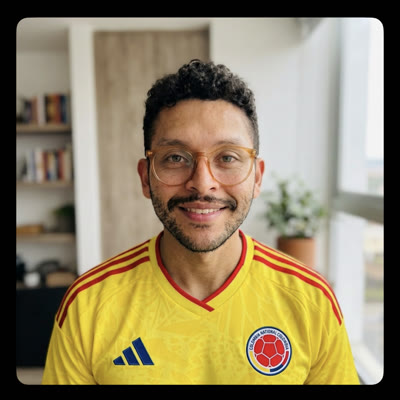
I am Santiago Garnica, a Colombian lawyer and Spanish tutor. At Garnica & Co I teach this with Colombian examples and a short German (B2) or English (C1) bridge, then you produce the line. The sister page on the other classic trap is ser vs estar for German speakers. The wider path is Spanish for German speakers.
Why does the German Konjunktiv map so poorly?
German speakers do two understandable things. They hunt for a würde-equivalent in every subjunctive sentence and do not find one. Or they avoid any clause with que and stay in safe present-indicative sentences that never say what they mean.
Spanish present subjunctive, at the frequency you need first, is usually:
a main clause that pushes, doubts, or aims + que + a changed verb.
The change is small and regular for the verbs you actually say:
| Indicative | Present subjunctive | You need it in |
|---|---|---|
| hablo | hable | Quiero que hables más despacio. |
| comes | comas | Es mejor que comas antes. |
| tiene | tenga | No creo que tenga tiempo. |
| es | sea | Quiero que sea claro. |
| va | vaya | Cuando vayas a Bogotá… |
| hace | haga | Te lo digo para que lo hagas hoy. |
We do not start with irregular inventories. These six cover a shocking amount of real talk. Estoy → esté, puedo → pueda, and hay → haya join them as soon as your sentences need them.
Which six patterns are worth week one?
1. Want and need: quiero que, necesito que
Quiero que me escribas hoy.
Necesito que llegues a las diez.
German bridge: this is not ich will, dass du schreiben würdest. It is a want pointed at another person. If the subject is the same, Spanish often uses the infinitive instead: Quiero escribir (I want to write), not Quiero que escriba for yourself.
2. Judgment: es importante que, es necesario que, es mejor que
Es importante que confirmes la hora.
Es mejor que lleves efectivo.
The adjective judges the other clause. That judgment is the trigger. Es verdad que tienes razón stays indicative, because you are calling it a fact. We contrast those two in class with your own sentences, not with a chart of forty adjectives.
3. Doubt and denial: no creo que, dudo que, no es cierto que
No creo que esté en la oficina.
Dudo que tengan la reserva.
Creo que está en la oficina (you believe it) stays indicative. The no is the usual switch. This is the pair German speakers mix when they translate ich glaube nicht, dass word for word and then freeze on the verb.
4. Future cuando, hasta que, en cuanto
When the action is still ahead, Spanish uses the subjunctive:
Cuando llegues, me escribes.
Avísame cuando tengas el correo.
En cuanto salga, te llamo.
If it is a habit that already happens, indicative: Cuando llego a casa, ceno. The test I use in class: has this cuando happened yet? If not, subjunctive.
5. Purpose: para que
Te lo mando para que lo leas hoy.
Hablo despacio para que me entiendas.
Para + infinitive is for the same subject: Estudio para hablar mejor. Para que brings in another person. That one distinction removes half the purpose errors.
6. Ojalá
Ojalá pueda viajar en octubre.
Ojalá tengas un buen vuelo.
Ojalá does not need que in these everyday lines. It is a wish, so the verb changes. We add ojalá que only if you already say it; both occur.
Common mistakes German speakers make (and the fix)
- Translating würde into every que-clause. Fix: name the trigger (quiero, es importante, no creo) before you touch the second verb.
- Same-subject quiero que yo… Fix: infinitive — Quiero salir.
- Indicative after future cuando. Fix: ask “has it happened yet?” If no → subjunctive.
- Avoiding que entirely. Fix: one pattern per week until quiero que is automatic.
- Starting with imperfect subjunctive textbooks. Fix: six present patterns in your life first.
Professionals hit these in soft emails and meetings: Es importante que me confirmes · Te lo envío para que lo revises · Avísame cuando tengas el contrato. Those lines belong in Spanish email & meeting phrases drills, not only in grammar charts. Work path: business Spanish lessons.
What we postpone
Imperfect subjunctive (hablara, fuera, tuviera) and si hypotheticals (si tuviera tiempo, iría) are real and useful. They are not week one. Students who start there memorize endings and still cannot say quiero que me confirmes. Sequence: six present patterns in your life, then the past forms when a story needs them.
We also postpone Spain-only textbook drills that never show up in a Bogotá conversation. Examples stay in Colombian Spanish: a class time, an email, a trip, a work follow-up. For the wider gap between classroom and street, see Colombian Spanish vs textbook.
A 15-minute drill
After the bridge, you speak. I correct the trigger, not your accent.
- Three quiero que lines about a real person (a colleague, a host, me)
- Two judgments: es importante que / es mejor que
- One belief and one doubt: creo que vs no creo que
- One future cuando about your next trip or next meeting
- One para que and one same-subject para + infinitive, so the contrast is in your mouth
Homework is five lines from your week, written the way you will say them, not a worksheet character.
How this shows up in a trial
In the free 25-minute class we notice whether que-clauses are already a wall. If they are, they become the weekly focus. Paid lessons are 50 minutes. Beginners are not barred: if you are still building the present tense, we keep one pattern (quiero que) and leave the other five for later. See the first month.
Primary CTA is always the free trial on garnica.co — not a marketplace profile.
- Trial: 25 minutes (0.5 credit)
- Paid lesson: 50 minutes (1 credit)
- List: $20 / 50 min
- Packs: single $20 · 5 $85 · 10 $160 (recommended) · 20 $300
Book on garnica.co: form, then Cal.com. Path detail: free Spanish trial class · book without a marketplace.
About the author
Santiago Garnica — Colombian lawyer and Spanish tutor. Structured 1:1 Colombian / Latin American Spanish with explanations in English (C1) or German (B2) when you need a bridge. Book directly at garnica.co.
FAQ
Is the Spanish subjunctive the same as the German Konjunktiv?
No. German Konjunktiv II often means “would / hypothetical.” Everyday Spanish subjunctive is a verb change after triggers like quiero que, es importante que, no creo que, future cuando, para que, and ojalá.
Do I need every irregular verb first?
No. Start with hablar, comer, tener, ser, ir, hacer. Add estar, poder, haber when your own sentences demand them.
When do I use the infinitive instead?
When the subject does not change. Quiero salir (I want to leave). Quiero que salgas (I want you to leave). Same test for para vs para que.
Can you explain the trigger in German?
Yes. One short German bridge for the trigger, then Spanish out loud. The goal is not to translate Konjunktiv labels forever.
How long until this feels usable?
If you speak the six patterns every lesson and reuse five personal lines, many learners stop freezing on quiero que within a few weeks. The full mood is larger than that. Usable beats complete.
How much do packs cost after the free class?
List $20 / 50 min. Single $20 · 5 for $85 · 10 for $160 (recommended) · 20 for $300.
Book a free class
Book a free class and bring one sentence you avoid because of que. Related: ser vs estar · Spanish for German speakers · Email & meeting phrases · About
Book a free class
Directly on garnica.co — not a marketplace as the main path.