Blog
German has one everyday verb for “to be”: sein. Spanish splits that job into ser and estar. That single fact explains why ser vs estar for German speakers feels unfair at first — and why a short German bridge plus spoken drills fixes it faster than another grammar PDF.
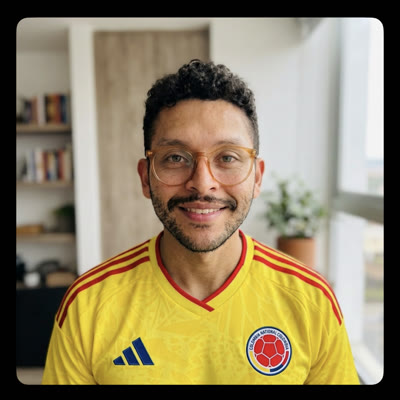
I am Santiago Garnica, a Colombian lawyer and Spanish tutor. At Garnica & Co I teach Colombian Spanish with English (C1) or German (B2) explanations when a rule blocks you. This page is ser estar explained for Germans: clear rules, Bogotá-style examples, and how we practice in 1:1 lessons — not a university chapter.
If you want the wider method first, start with Spanish for German speakers.
In German you say:
Spanish refuses to use one verb for all of these. Rough map:
| German idea | Spanish | Quick test |
|-------------|---------|------------|
| What something *is* (identity, profession, material, origin, time) | ser | Would you answer “what kind of thing / who?” |
| How / where something *is* (state, feeling, location, result) | estar | Would you answer “how / where right now?” |
German speakers often default to ser everywhere because *sein* maps psychologically to “essence.” Or they freeze and avoid full sentences. Neither habit survives a real café conversation in Colombia.
The fix is not memorizing 40 exceptions on day one. The fix is five high-frequency frames, then speaking them until they feel automatic.
Use ser when you classify or define:
German bridge: if you would answer *Was / Wer ist das?* with a category, start with ser.
Colombian classroom examples I actually use:
Use estar when you describe a condition or place:
German bridge: if you would answer *Wie geht’s?* or *Wo ist …?*, start with estar.
Colombian examples:
Same adjective, different verb → different meaning. This is where ser vs estar German speakers lose points in real talk.
| Phrase | Idea |
|--------|------|
| *Es aburrido.* | He/it is boring (character / default) |
| *Está aburrido.* | He is bored (state now) |
| *Es listo.* | He is clever |
| *Está listo.* | He is ready |
| *Es bueno.* | He/it is good (quality) |
| *Está bueno.* | Often “tastes good” / looking good in casual LatAm talk — context matters |
| *Es rico.* | Wealthy / rich (person) — or “rich” as quality of food in some contexts |
| *Está rico.* | Food tastes good (very common) |
We do not dump twenty pairs in week one. We drill the three pairs that appear in *your* sentences (work, travel, food, family).
German *sein* covers both. Spanish splits:
Mental check: if you can replace the subject with “the event happens,” prefer ser. If you can point at a body or object in space, prefer estar.
Travel Colombia example: *El museo está en La Candelaria.* but *El concierto es el sábado en el teatro.*
Estar + gerund builds progressive meaning: *Estoy trabajando.* / *Estamos aprendiendo español.*
German speakers often over-translate *ich bin am …* into odd calques, or avoid the progressive and sound abrupt. In lessons we practice three lines about *today*: where you are, how you feel, what you are doing — all with estar where it belongs.
After a short DE/EN bridge, you speak — I correct:
Homework: five reusable lines about *your* week — not random textbook characters.
This is the same interference cluster outlined in Spanish for German speakers, deepened into practice. Beginners can start here inside a structured first month — see Spanish tutor for beginners.
We correct the error that blocks understanding first. Pretty theory second.
In the free 25-minute class on garnica.co we check level in EN or DE, pick one goal, and often spot whether *ser*/*estar* is already a speaking blocker. Trial credit: 0.5. Paid lessons are 50 minutes (1 credit). List price $20 / 50 min; after the trial most learners take the 10-lesson pack ($160). Also: single $20 · 5 ($85) · 20 ($300). Reschedule ≥24h. Packs expire in 6 months.
CTA path: Formspree → Cal.com on garnica.co — not a marketplace as the main door. Related booking detail: free Spanish trial class.
Santiago Garnica — Colombian lawyer and Spanish tutor. Structured 1:1 Colombian / Latin American Spanish with explanations in English (C1) or German (B2) when you need a bridge. Book directly at garnica.co.
Because German covers both with sein. Spanish splits identity (ser) from state and location (estar). Without spoken drills, learners default to one verb under pressure.
No single rule covers every edge case. The practical rule set above (identity vs state/location, plus the adjective pairs you actually use) covers most daily conversation. Edge cases get a short bridge, then practice.
Yes, when it helps. Short German (B2) or English (C1) bridge, then Spanish production. The goal is speaking, not translating forever.
Default is Colombian / Latin American Spanish — everyday lines you can reuse in Bogotá and LatAm contexts. Spain forms are noted if you need them for an exam.
Often within a few focused weeks if you speak every session and reuse five personal lines. Apps can teach the chart; a tutor catches the sentence you keep breaking in real time.
Reserve your free 25-minute class on garnica.co. Bring one goal. If *ser*/*estar* is your wall, we make it a weekly focus — with a German bridge when you need it.
Related: Spanish for German speakers · Colombian vs textbook Spanish · Beginners: first month · About
Directly on garnica.co — not a marketplace as the main path.
 Garnica & Co