Blog
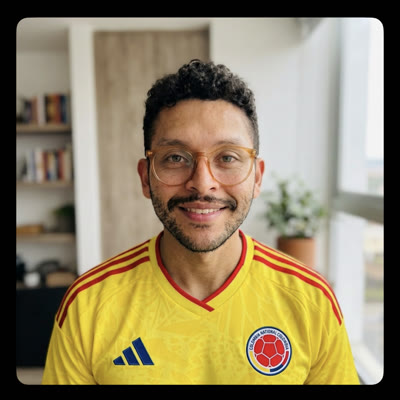
German speakers often learn Spanish fast — then hit a wall on gender, *ser*/*estar*, or the subjunctive. The wall is smaller when someone can explain the rule in German, then put you back into Spanish practice.
That is the niche Garnica & Co is built for: Colombian Spanish, taught with English (C1) or German (B2) as a bridge when you need it. I am Santiago Garnica, a Colombian lawyer and Spanish tutor. Lessons are structured 1:1 — not endless free chat, not a marketplace card as the main door.
German and Spanish share more structure than English and Spanish in some places (endings, compound thinking, a comfort with “rules”). In others, they clash hard: articles and gender, verb aspects, and how politeness works in speech.
A tutor who only stays in Spanish can work for solid intermediates. Beginners and careful learners often waste energy decoding the *meta*-explanation. A short German (or English) bridge saves that energy for speaking — which is what you came for.
CEFR framing helps here: at A1–A2 you need clarity more than immersion theatre. At B1 you still benefit from a DE gloss when a rule is new. The goal is not to teach Spanish *in* German. The goal is to unblock Spanish *with* German when the rule is opaque.
German has three genders; Spanish has two. Transfer errors are normal: *el*/*la* swaps, or defaulting to one article under stress. We fix this with short noun–article drills tied to *your* vocabulary (work, travel, hobbies) — not random word lists.
German often collapses both into *sein*. Spanish splits identity/essence (*ser*) from state/location (*estar*). One lesson is not enough. We reuse the contrast every week in sentences you actually say: how you feel, where you are, what your job *is*.
German past habits and Spanish *pretérito* / *imperfecto* do not map 1:1. German speakers often overuse one Spanish past or avoid storytelling. Week focus: one personal story (weekend, trip, work week) with targeted correction.
You do not need a full university chapter on day one. You need the high-frequency patterns: wishes, polite requests, “I hope that…”. We introduce them when your goals need them (travel, email, meetings) — with a German bridge sentence, then Spanish production.
Colombian Spanish often sounds warm and careful. For DACH professionals used to clear *Sie*/*du* lines, we map situations: shop, taxi, client call, friend. You leave with phrases, not a lecture on culture alone.
False friends slow German speakers more than they expect. A short list we revisit in class:
We do not memorize 200 false friends. We catch the ones that appear in *your* speaking and nail them.
List price: $20 / 50 min. After the free class, the recommended pack is 10 lessons ($160). Also: single $20 · 5 ($85) · 20 ($300). Reschedule ≥24h. No-show burns 1 credit. Packs expire in 6 months. No refund on the first paid class or a started pack.
You are not buying a podcast with a human attached. You are buying clarity.
We do direct booking, real reviews from students like Stefan (who noted structure and strong German/English while aiming for B2), and a method you can follow.
Santiago Garnica — Colombian lawyer and Spanish tutor. I teach structured 1:1 Colombian / Latin American Spanish with explanations in English (C1) or German (B2) when you need a bridge. Book directly at garnica.co.
Yes, when it helps. I teach in Spanish with bridges in German (B2) or English (C1). The bridge is short; the practice returns to Spanish so you build speaking, not translation habits.
No. The DE bridge helps most at A1–B1, but B1–B2 learners use it for stubborn points (past contrast, subjunctive, formal email). The free class checks fit and level.
Colombian / Latin American Spanish on purpose — clear vowels, *ustedes* for plural “you,” everyday vocabulary from Bogotá and the region. Textbook Spain forms (*vosotros*, some vocab) are explained if you need them for exams, but the default is LatAm.
On garnica.co: short form (Formspree) → free 25-minute credit → pick a time on Cal.com. No WhatsApp wall. Afterward you can continue with a pack if it fits.
Most learners start with the 10-lesson pack ($160) after the free class. List price remains $20 / 50 min for singles. Policies are on the site: reschedule ≥24h, packs expire in 6 months.
Reserve your free 25-minute class on garnica.co. Bring one goal (travel, work, or everyday). Leave with a simple plan.
Related: Colombian vs textbook Spanish · Beginners: first month · About
Directly on garnica.co — not a marketplace as the main path.
 Garnica & Co