 Garnica & Co
Blog
Spanish Reflexive Verbs for German Speakers: Me Llamo, Me Acuerdo and the Ones That Don't Match
If you speak German, Spanish reflexive verbs should feel familiar. Ich wasche mich is me lavo. Ich freue mich is me alegro. Same idea, a small pronoun pointing back at the subject.
Then you say me acuerdo and ich erinnere mich lines up nicely, and you start trusting the pattern. A week later you say me olvido when a Colombian would just say se me olvidó, or you translate ich treffe mich mit Freunden word for word and get a funny look. The idea is the same. The list of verbs is not.
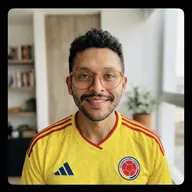
I am Santiago Garnica, a Colombian lawyer and Spanish tutor at Garnica & Co. I teach 1:1 Colombian / Latin American Spanish online for German and English speakers. This guide is what I go through with German-speaking students when reflexives come up: what transfers from German for free, and which few verbs you need to relearn.
Ready to start? Try a free class first.
The short version
- Spanish reflexive pronouns: me, te, se, nos, (os), se
- They go before a conjugated verb: me levanto, no te preocupes
- Or attached to an infinitive, gerund or affirmative command: voy a levantarme, estoy duchándome, ¡siéntate!
- Most German reflexives have a Spanish reflexive partner, but not all, and some Spanish reflexives are not reflexive in German
- In Latin America you use se for ustedes, never os
The pronouns, side by side with German
| Person | Spanish | German | Example |
|---|---|---|---|
| yo | me | mich / mir | me llamo Ana — ich heiße Ana |
| tú | te | dich / dir | ¿te acuerdas? — erinnerst du dich? |
| él / ella / usted | se | sich | se sienta — er/sie setzt sich |
| nosotros | nos | uns | nos vemos — wir sehen uns |
| vosotros (Spain) | os | euch | os levantáis — ihr steht auf |
| ellos / ustedes | se | sich / euch | se quedan — sie bleiben / ihr bleibt |
Good news for you: Spanish has no Dativ/Akkusativ split here. Mich and mir both become me. Ich wasche mich and ich wasche mir die Hände are me lavo and me lavo las manos. One less decision.
Notice the second example: Spanish says las manos, not mis manos. The reflexive pronoun already tells you whose hands they are, exactly like German mir die Hände. German speakers usually get this right on instinct. English speakers don't.
Where the pronoun goes
This is mostly mechanical, and once it clicks you stop thinking about it.
Before a conjugated verb:
- Me ducho por la mañana. — Ich dusche morgens.
- No te preocupes. — Mach dir keine Sorgen.
- Nos conocimos en Bogotá. — Wir haben uns in Bogotá kennengelernt.
Attached to the end of an infinitive, a gerund, or an affirmative command:
- Tengo que irme. — Ich muss los.
- Estoy arreglándome. — Ich mache mich gerade fertig.
- ¡Siéntese, por favor! — Setzen Sie sich bitte!
With infinitives and gerunds you can choose: me tengo que ir and tengo que irme are both normal. Colombians use both all the time. Negative commands always put it in front: ¡no te vayas!
Reflexive in both languages (free transfer)
These work the way your German brain expects:
| Spanish | German |
|---|---|
| levantarse | aufstehen (sich erheben) |
| sentarse | sich setzen |
| ducharse / bañarse | (sich) duschen / baden |
| vestirse | sich anziehen |
| acostarse | sich hinlegen / ins Bett gehen |
| alegrarse (de) | sich freuen (über) |
| acordarse (de) | sich erinnern (an) |
| quejarse (de) | sich beschweren (über) |
| preocuparse (por) | sich Sorgen machen (um) |
| interesarse (por) | sich interessieren (für) |
| equivocarse | sich irren |
| sentirse | sich fühlen |
| despedirse (de) | sich verabschieden (von) |
Watch the prepositions. German an, über, für do not map one-to-one. Me acuerdo de ti, not me acuerdo a ti. Me intereso por la historia (or more commonly, me interesa la historia, which works like gustar).
Reflexive in German, not in Spanish
This is where German speakers make mistakes, because the German habit pushes a pronoun in where Spanish doesn't want one.
- sich treffen mit → verse con or quedar con (Spain), but encontrarse con often means bumping into someone. Hoy me veo con Laura — Ich treffe mich heute mit Laura.
- sich beeilen → apurarse is reflexive in Colombia, but darse prisa in Spain. Fine either way.
- sich bedanken → agradecer (not reflexive): le agradezco mucho.
- sich entschuldigen → disculparse exists, but in real speech you say perdón, disculpe, qué pena (very Colombian).
- sich vorstellen (imagine) → imaginar(se); sich vorstellen (introduce) → presentarse.
- sich lohnen → valer la pena: vale la pena, no pronoun.
- sich befinden → estar / quedar: ¿dónde queda el banco?
Reflexive in Spanish, not in German
The other direction surprises people:
- irse — to leave: me voy (ich gehe jetzt). Voy alone means "I'm going (somewhere)."
- quedarse — to stay: me quedo en casa.
- llamarse — to be called: ¿cómo te llamas? (wie heißt du?)
- morirse — to die (emotional, or "dying to"): ¡me muero de hambre!
- comerse / tomarse — eating or drinking something completely: me comí toda la pizza, me tomé un tinto.
- casarse — to get married (heiraten).
- enfermarse — to get sick (krank werden), very common in Colombia.
The pattern behind irse, comerse, tomarse: the pronoun adds completion or involvement, not "doing it to yourself." That's why me comí la torta sounds more natural than comí la torta when the cake is gone.
Meaning changes: same verb, different sense
A handful of verbs change meaning with se. Learn these as pairs:
| Without se | With se |
|---|---|
| ir — to go | irse — to leave |
| dormir — to sleep | dormirse — to fall asleep |
| llevar — to carry | llevarse — to take away / get along (nos llevamos bien) |
| poner — to put | ponerse — to put on / become (se puso rojo) |
| quedar — to be located / to arrange | quedarse — to stay |
| parecer — to seem | parecerse a — to look like |
| acordar — to agree | acordarse de — to remember |
Reciprocal "each other"
Plural reflexive pronouns also mean "each other," just like German uns / sich:
- Nos escribimos todos los días. — Wir schreiben uns jeden Tag.
- Se conocen desde niños. — Sie kennen sich seit ihrer Kindheit.
- Nos vemos mañana. — Wir sehen uns morgen. (The most common goodbye in Colombia.)
The accidental "se": se me olvidó
This one has no good German equivalent, and it's everywhere in Colombian speech:
- Se me olvidó. — Ich hab's vergessen (lit. "it forgot itself on me").
- Se me cayó el celular. — Mir ist das Handy runtergefallen.
- Se nos acabó la leche. — Uns ist die Milch ausgegangen.
- Se le perdieron las llaves. — Er hat seine Schlüssel verloren.
The closest German is actually the dative: mir ist … runtergefallen. If you think "mir ist passiert," you'll build these correctly. The thing becomes the subject, so the verb agrees with it: se me cayó el vaso, but se me cayeron los vasos.
Saying olvidé isn't wrong. But se me olvidó is what you'll hear in Bogotá, and it sounds softer, like it wasn't really your fault.
Five mistakes I hear from German speakers
- Forgetting the pronoun on daily-routine verbs. Levanto a las siete → me levanto a las siete.
- Translating "sich treffen" literally. Me encuentro con Laura can sound like an accidental meeting. Say me veo con Laura.
- Using os in Latin America. In Colombia it's always ustedes … se: ¿ustedes se quedan?
- Possessive with body parts. Me lavo mis dientes → me lavo los dientes.
- Wrong position with commands. ¡Te siéntate! → ¡Siéntate! and ¡No te sientes!
A 10-minute drill
Describe your morning out loud, in order, using only reflexive verbs: me despierto, me levanto, me ducho, me visto, me tomo un café, me voy. Then do it in the past: me desperté, me levanté… Then say two things that went wrong with se me…: se me olvidó el paraguas, se me acabó la batería.
If you can do that without pausing, reflexives are no longer a grammar topic for you. They're just how you talk.
FAQ
What are reflexive verbs in Spanish?
Verbs used with a pronoun (me, te, se, nos, os, se) that refers back to the subject: me llamo, te levantas, se sienta. In the dictionary they end in -se: llamarse, levantarse, sentarse.
Are Spanish reflexive verbs the same as in German?
The concept is the same and many verbs match (sich setzen — sentarse). But some German reflexives aren't reflexive in Spanish (sich bedanken — agradecer), and some Spanish reflexives aren't in German (irse, quedarse, llamarse).
Where does the reflexive pronoun go?
Before a conjugated verb (me levanto), or attached to an infinitive, gerund or affirmative command (levantarme, levantándome, ¡levántate!). Negative commands put it in front: ¡no te levantes!
What does "se me olvidó" mean?
"I forgot." It's the accidental se: the thing happens "to you," like German mir ist … passiert. Very common in Colombia and all of Latin America.
Do I need "os" for Latin American Spanish?
No. Os is only for vosotros in Spain. In Colombia and the rest of Latin America, use ustedes with se.
Practice reflexives in a real conversation
Rules are the easy part. Using me voy, se me olvidó and nos vemos without thinking happens when you talk. In a 1:1 class we build that from your own routine, with German explanations whenever you need them.
Start with a free 25-minute class on garnica.co, or see the lesson packs if you already know you want regular practice.
Related: Ser vs estar for German speakers · Gustar explained · Common Spanish mistakes German speakers make · Spanish subjunctive · Private Spanish lessons online
Ready to start? Try a free class first.
Book a free class
Directly on garnica.co — not a marketplace as the main path.