 Garnica & Co
Blog
Travel Spanish for Colombia: Phrases a Bogotá Tutor Actually Uses
Travel Spanish for Colombia is a small set of lines you can say to a stranger in Bogotá: greet, ask politely, find a place, and handle money. It is not a 200-line phrasebook, and it is not Spain-textbook vosotros.
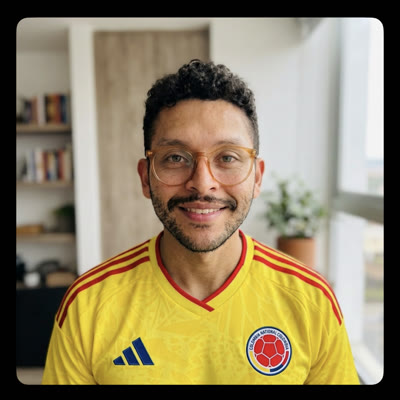
I am Santiago Garnica, a Colombian lawyer and Spanish tutor from Colombia. In Garnica & Co lessons I drill the sentences travelers actually freeze on, then we put them in your trip: airport, café, taxi, museum, a delayed plan. Explanations in English (C1) or German (B2) only when a line will not come out. Then you speak.
If you want the accent story first, read Colombian Spanish vs textbook Spanish. To hear it in a first lesson, book a free class.
What should you learn before a short trip?
Five jobs cover most days in the city. Learn these before you collect slang.
- Greet and answer “how are you” without a speech
- Ask for something politely
- Ask where a place is
- Ask a price and pay
- Say you do not understand and ask for a repeat
If those five work, you can eat, move, and recover when you get lost. Stories and jokes can wait until the trip is not stressful.
How do people greet in Bogotá?
A normal hello among strangers is calm, not a performance.
- Buenos días. / Buenas tardes. / Buenas noches.
- ¿Qué más? — very common in Colombia. It means “how’s it going?”, not “what else do you want?”
- Bien, ¿y tú? or, more formal, Bien, ¿y usted?
- Mucho gusto. when you are introduced
- Con permiso. when you need to pass
With a stranger, a taxi driver, hotel staff, or anyone older, usted is the polite default in Bogotá. Friends and many younger people use tú. You will hear both. For a first trip, start with usted until the other person switches.
We do not drill vosotros. Colombians do not use it in daily speech. If your textbook lives on vosotros, park it for the trip and use ustedes for “you all.”
How do you ask without sounding blunt?
Colombian Spanish softens requests. The line you will hear, and should be able to say, is ¿Me regala…? It is polite. It does not mean someone is giving you a gift.
| You need | Say |
|---|---|
| A coffee | ¿Me regala un tinto, por favor? (un tinto is a black coffee) |
| The bill | ¿Me regala la cuenta, por favor? |
| A bag | ¿Me regala una bolsa, por favor? |
| Help | ¿Me ayuda con esto, por favor? |
| A minute | ¿Me regala un momento? |
Por favor and gracias do the rest. A la orden is what staff often answer: “at your service,” not a question you must answer.
How do you ask for directions and prices?
Directions:
- ¿Dónde queda el museo? — where is it located
- ¿Queda lejos?
- ¿Cómo llego a La Candelaria?
- Siga derecho y cruce a la izquierda. (you will hear this; you mainly need to recognize derecho, izquierda, derecha, al frente)
Quedar for “to be located” is the travel verb. Estar also works (¿Dónde está el baño?). Both are fine. Do not use ser for where a building is. That split is the same one in ser vs estar for German speakers.
Money, said slowly:
- ¿Cuánto vale?
- ¿Cuánto es?
- ¿Me cobra, por favor?
- ¿Aceptan tarjeta?
Prices in Colombia are in pesos and sound huge if you translate digit by digit under stress. In class we practice hearing a price and repeating it back, not converting it in your head while someone waits.
What do you say when you are stuck?
This is the most useful set on the page:
- No entiendo. ¿Puede repetir, por favor?
- Más despacio, por favor.
- ¿Cómo se dice …?
- Estoy perdido. / Estoy perdida.
Then one noun: el hotel, la estación, esta dirección. A calm repeat beats a paragraph of apology.
What we do not put in week one
We do not start with regional slang lists, insults, or a map of every Colombian accent. Bogotá speech is relatively clear; the coast and Antioquia sound different, and voseo (common in Antioquia and Valle, not the Bogotá default) will confuse you if we add it before usted is stable. One trip, one register.
We also do not pretend a phrase list is the lesson. In the hour you say the lines about your hotel, your neighborhood, your food. I correct the freeze, not a fictional tourist named Carlos.
How a trip goal fits the free class
In the free 25-minute class we check level, pick the trip, and choose five lines. If you continue, paid lessons are 50 minutes at $20, or a pack: 5 for $85, 10 for $160, 20 for $300. Same rules as the rest of the site: reschedule at least 24 hours ahead, packs expire in 6 months, book on garnica.co.
Bring dates, the city, and one situation you dread (ordering, a taxi, a pharmacy). That is enough.
FAQ
Is travel Spanish for Colombia different from textbook Spanish?
Yes, in the lines you need first: usted with strangers, ustedes instead of vosotros, ¿me regala…?, and ¿qué más? as a greeting. Grammar you already know still applies.
Should I use tú or usted in Bogotá?
With strangers, start with usted. Switch to tú if they do. You will not offend a friend by being a step more formal on day one.
Do I need slang before I land?
No. Greetings, polite requests, directions, prices, and “please repeat” cover a short city trip. Slang is optional color after those lines work.
Can I practice this if I am a beginner?
Yes. Five lines, spoken, beat a chapter you cannot say. Beginners can start here inside a structured first month.
Do you explain in German?
Yes. A short German (B2) or English (C1) bridge, then the Spanish line again until you can order and ask the way.
Book a free class
Book a free class and bring one Colombia scenario. Related: Colombian Spanish tutor online · About
Book a free class
Directly on garnica.co — not a marketplace as the main path.